


Humanoid robotics is no longer a distant concept. It is becoming a real technology category that investors, developers, and even everyday consumers are beginning to follow closely. This momentum was on full display during a recent Fintech TV segment where Teddy Haggerty, CEO of RoboStore, joined Remy Blaire and Brendan Ahern, CIO of KraneShares, for a deep look at the future of humanoid robots.
The conversation centered on a single truth that is shaping the next decade. Hardware and AI are finally meeting at the same level of maturity. Humanoid robots are becoming powerful enough, intelligent enough, and affordable enough to shift from lab demos into practical early deployments.
Introducing the Unitree G1
Teddy opened the segment by showcasing the Unitree G1. The G1 is a compact humanoid platform designed for developers who want access to real hardware that can run advanced autonomy, perception systems, and LLM-based behaviours. Teddy broke down the technology inside the platform: NVIDIA computing that gives the robot the power to run large language models locally; Intel RealSense depth cameras; integrated LiDAR for mapping and spatial awareness. All built by Unitree with contributions from companies across the global robotics ecosystem.
Teddy emphasized an important point. This generation of humanoids is not meant to serve as home assistants yet. They are meant to be built on. They are the hardware foundation for the next wave of robotics software. Developers are experimenting every day, creating new behaviors, new skills and new control systems. The pace of change is rapid and visible in the updates released each month.
The Global Robotics Race
Brendan Ahern shared perspective from his time in Asia. Many Asian economies already treat robotics as a core strategic industry. China in particular is scaling manufacturing at an incredible pace. He noted predictions from Huawei that say “over 90 % of homes in China will have intelligent robots in ten years”, pointing to the country’s strong focus on robotics for the consumer market. Morgan Stanley forecasts one billion humanoids globally by 2050.
Brendan also highlighted the upcoming Unitree IPO. As one of the most influential humanoid robotics companies in the world, Unitree is a major part of the investment conversation. The sector spans far beyond the robot manufacturers themselves. It includes rare earth companies, chip makers, automotive groups that are shifting into robotics, and specialized AI developers.
This is why KraneShares’ KOID ETF was created. It gives investors access to a broad ecosystem of companies shaping the future of humanoids, AI and robotics.
AI Meets Robotics
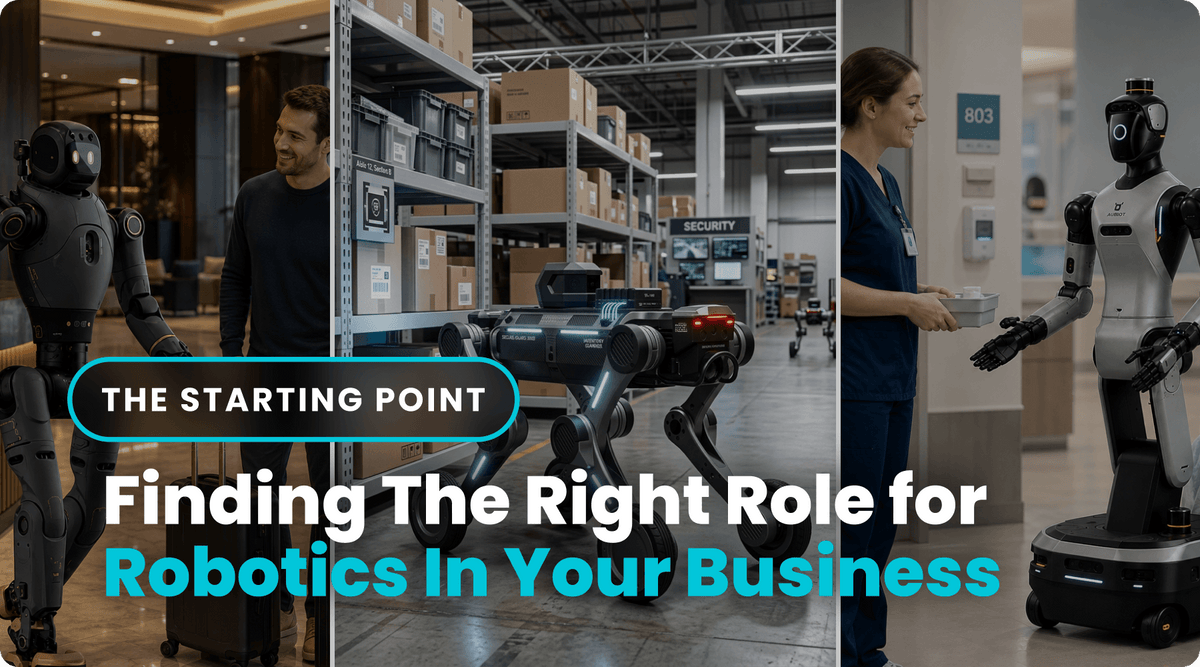
A major theme of the discussion was the merging of AI and robotics. Humanoid robots are strongest when they combine powerful hardware with intelligent models. Brendan walked through examples of how humanoids are already taking on customer-facing roles, light manufacturing tasks and future public safety applications.
Teddy expanded on the AI side. Many robots can now run Custom LLMs onboard. These models allow humanoids to interpret natural language, understand context and perform multi-step tasks. In the industry this is seen as the next frontier. A humanoid that can understand intent will eventually serve as a guide, a concierge, a front-desk assistant, and later a more advanced coworker that can help navigate human environments.
RoboStore has already begun showcasing this direction through its own embodied AI solutions. These demos show how a humanoid can answer questions, translate languages, perform gestures and eventually take on more sophisticated actions like guided tours or instructional support.
The Future of Deployment
The discussion also touched on a key reality. The work happening today is research and development. Companies, universities and labs are buying humanoids not because they replace jobs today, but because they help us understand what these robots will be able to do tomorrow. Every deployment is a test bed for future capability.
Teddy pointed out that different models serve different purposes. Some are pure development platforms. Some are for exploration and experimentation. Some are early consumer-facing machines intended for entertainment and education. The diversity of platforms helps accelerate innovation because developers get access to hardware that fits their use case and their budget.
Why This Matters
The robotics space is moving fast. Hardware is advancing. AI is advancing. And the investment world is now paying attention to both at the same time. Brendan said it clearly. Robotics is coming to investors whether they realize it or not.
For RoboStore, this segment underscores the growing influence of our work. Teddy represents a leadership voice pushing the industry forward. By giving developers access to platforms like the Unitree G1 and by creating pathways for embodied AI, RoboStore sits at the center of this emerging movement.
Humanoid robots are no longer about speculation. They are about building real capability. The companies developing this technology today will shape how humans interact with intelligent machines for decades to come.
And as the segment showed, that work is already happening.


Share:
MindOn’s Demo Shows What’s Possible with the Unitree G1 Humanoid
A Fully Customized Embodied AI Assistant Running Locally on the Unitree G1