


Last week, CNBC welcomed Ted Haggerty, CEO of RoboStore, to Power Lunch alongside a very different kind of guest. A real humanoid robot named KOID.
The segment quickly gained attention online, framed around the ongoing “AI bubble” debate. But even that framing misses the real story. KOID is not a concept, a render, or a staged demo. It is a commercially available humanoid robot built by Unitree Robotics and already shipping to customers today.
A Real Humanoid, in a Real Newsroom
KOID walks, talks, balances, and responds in real time. It weighs roughly 77 pounds and starts with 23 degrees of freedom, expandable into the low 40s depending on configuration. Everything viewers saw on CNBC is exactly what customers can experience out of the box on platforms like the Unitree G1.
The humanoid shown in the segment is a customized G1, featuring an all-black vinyl wrap and a head light color changed from blue to red. While subtle, it offers a glimpse into how humanoid platforms can evolve beyond stock appearances and begin to reflect different use cases, environments, or identities as the technology matures.
Even before the cameras rolled, KOID drew attention. Employees from across the CNBC office gathered to watch the robot move through the space and prepare for airtime, underscoring how quickly humanoids capture interest when they enter real environments.
One brief moment in the broadcast is worth clarifying. Around the 1 minute and 10 second mark, KOID appears to pause after being asked a question. In reality, the robot was responding, but a microphone issue prevented the audio from being captured.
What makes that moment notable is not the glitch, but what was happening behind the scenes. KOID successfully received the question, connected to the internet, and routed the prompt through its internal AI software developed by our team to generate an accurate response in real time, much like a traditional AI assistant would. Aside from the latency discussed in the interview, the system performed as intended, highlighting the real-time connectivity and intelligence already possible on humanoid platforms today.

The Name KOID Is Not a Coincidence
KOID was intentionally named after the robotics focused KOID ETF. This was not accidental branding. It was a signal of confidence in the long-term trajectory of humanoid robotics and its growing relevance across industry, research, and investment communities.
The robot itself represents something tangible. Not speculation, not hype, but a physical platform that already exists, already moves, and is already being used.
Humanoids Are Not Finished Products. That Is the Point.
As Ted Haggerty noted during the interview, the industry is still in a prototyping phase when it comes to defining what humanoid robots should ultimately do.
“What is it that we really want robots to do? Do we want them to help in the home, in manufacturing, or in other areas?”
That uncertainty is not a weakness. It is the work.
Humanoid robots are not meant to replace people tomorrow. Their value today is that they give educators, developers, and organizations a real platform to explore mobility, manipulation, perception, and interaction in live environments.
How Humanoid Robots Are Being Used and Developed Today
Rather than focusing on distant promises, it is more useful to look at where humanoids are already making notable progress.
-
Education and Learning
From K-12 classrooms to universities, humanoid robots are being used to teach coding, robotics fundamentals, and embodied AI. Students are not learning in simulation alone. They are programming real machines, seeing cause and effect instantly, and building intuition that simply cannot be taught on a screen. -
Research and Development
Fully autonomous, general-purpose humanoids operating flawlessly in any environment do not exist yet. Despite what staged videos may suggest, that level of autonomy has not been proven at scale. What does exist is the hardware foundation. Development labs around the world are actively training perception, balance, manipulation, and decision-making systems on real humanoid platforms like the Unitree G1. -
Manufacturing and Industrial Work
Humanoids show long-term promise in manufacturing, but safety, reliability, and efficiency are still being refined. Today, many manufacturing tasks are better handled by specialized robots. That said, humanoids are increasingly being explored for flexible, human-like tasks where adaptability matters. -
Front Desk and Guided Interaction
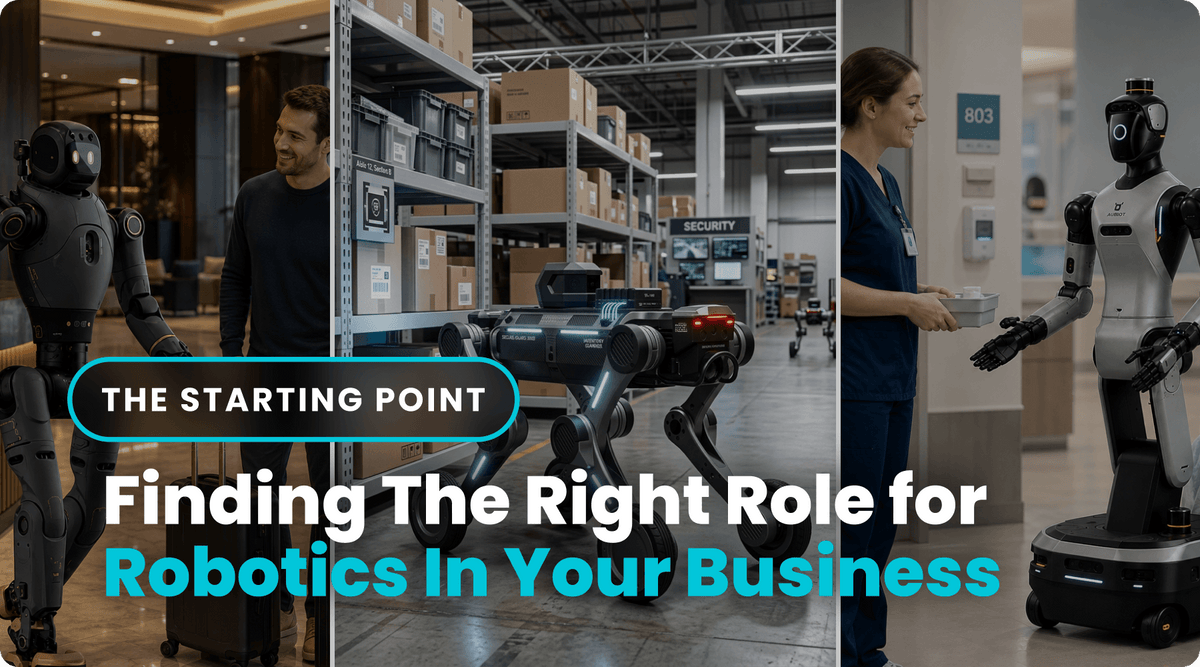
With custom conversational systems and LLMs, humanoids are already being tested for reception, guided tours, visitor check-in, and basic information delivery. These use cases do not require full autonomy and are much closer to practical deployment. -
Inspection and Hazardous Environments
While quadrupeds currently excel in autonomous inspection, humanoids are beginning to close that gap. For environments designed around human movement, stairs, doors, ladders, humanoids offer long-term advantages, especially for tasks that are unsafe or inefficient for people.
Why Unitree Matters Right Now
Unitree stands out not just for innovation, but for execution. It is one of the few robotics companies actively manufacturing and shipping advanced robots at scale today.
Beyond the G1 humanoid platform, Unitree has established itself as a leader through the success of its quadruped robots, including the Go1 and Go2, as well as larger industrial systems like the B2. Alongside these, Unitree’s H1 humanoid is also commercially available and already being deployed in real-world environments.

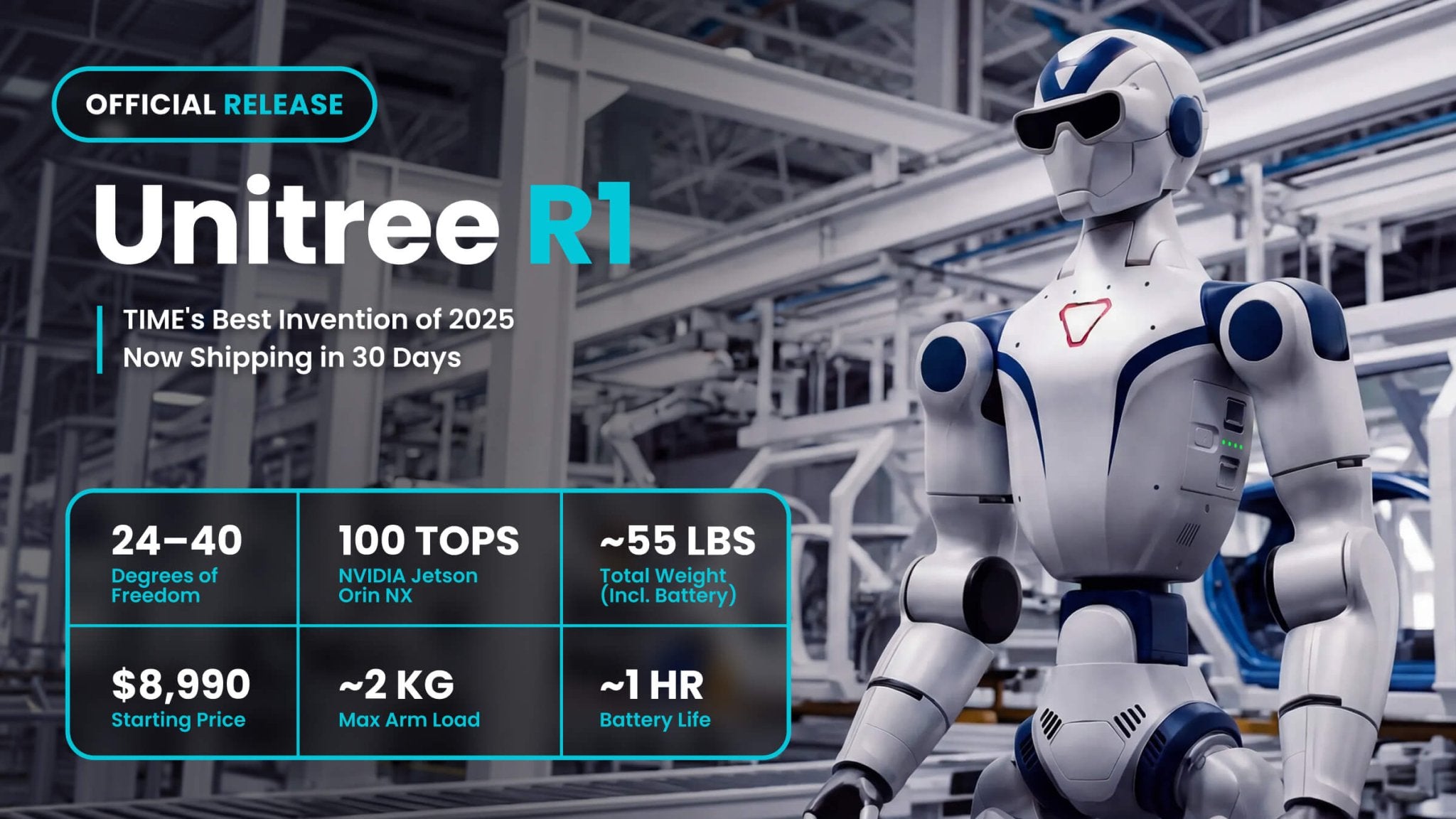
At the same time, Unitree is advancing its next generation lineup. Multiple G1 variants, the R1 platform, the H2 humanoid, and the A2 quadruped have moved well beyond early prototypes. These machines already exist, operate in the real world, and have been publicly demonstrated. The remaining work is not whether they function, but how to deliver them reliably and at scale.
That distinction sets Unitree apart. While much of the industry remains focused on isolated prototypes and staged demos, Unitree is simultaneously shipping today’s robots and preparing the next wave for broader deployment.
That matters, because real adoption requires real hardware in real hands.
The Real Story Is Adoption
The broader debate around AI bubbles will continue, but humanoid robotics is moving forward regardless of headlines.
KOID’s appearance on CNBC was not about speculation. It was about presence. A real humanoid, on a real stage, answering real questions.
Through RoboStore, these platforms are already reaching educators, researchers, and organizations across the United States. Progress is happening the way it always does. Gradually, publicly, and through hands-on use.
Humanoid robots are not a future concept. They are a present reality, and we are only at the beginning of understanding what they will become.


Share:
Unitree Launches Public Beta of Its App Store for G1 Humanoid Robots
Humanoids at CES 2026: Prototype vs Pilot vs Production Explained